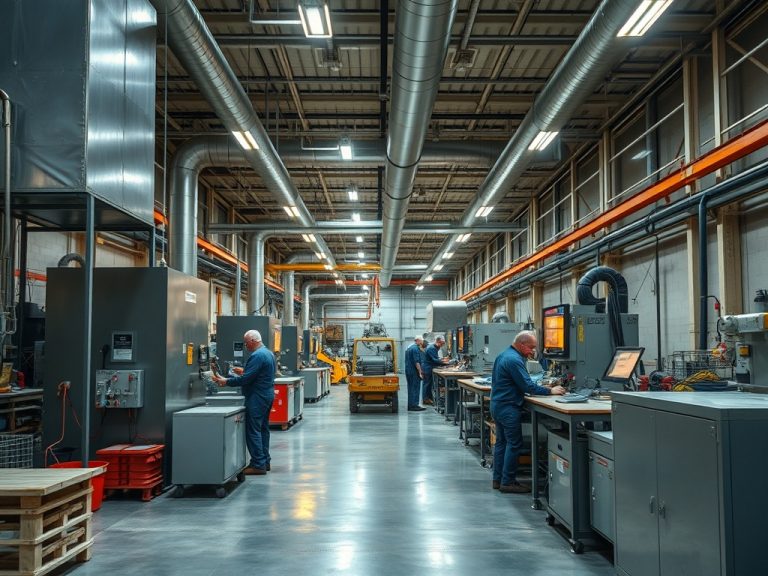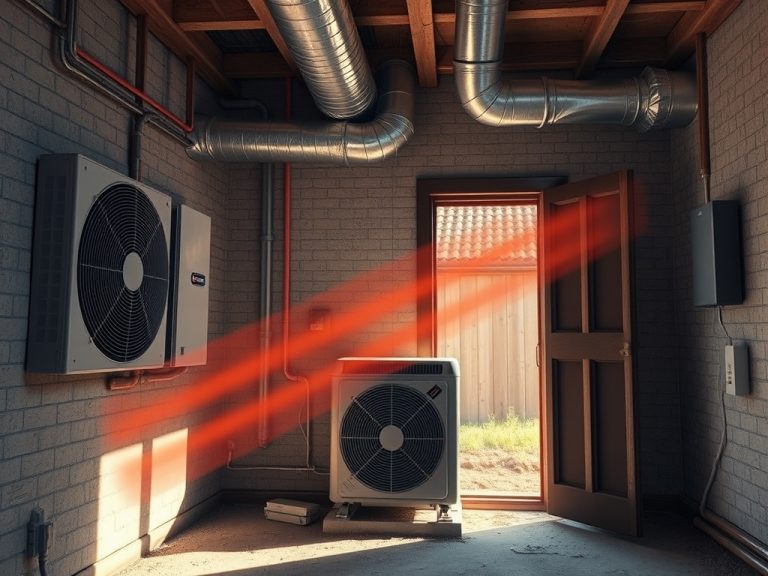
An air-side economizer can reduce the amount of mechanical cooling a commercial HVAC system needs when outdoor air conditions are suitable. Instead of relying only on the refrigeration cycle, the system increases outdoor airflow and uses that air to meet part or all of the cooling load, subject to humidity, controls, ventilation, and equipment limits.
- Economizer cooling is controlled use of favorable outdoor air for cooling, not simply “opening a vent.”
- Savings depend on climate, building load, operating hours, control sequence, sensor accuracy, damper operation, and how much compressor cooling can actually be displaced.
- A malfunctioning economizer can waste energy or create comfort problems, so operation and maintenance matter as much as the original design.
How an Air-Side Economizer Works
A typical economizer uses outdoor-air and return-air dampers, actuators, sensors, and a controller. When outdoor conditions satisfy the programmed criteria, the controller can open the outdoor-air path beyond the minimum ventilation position and reduce recirculated return air. If that outdoor air is cool and suitable enough, it can carry heat out of the building with less compressor operation.
Pacific Northwest National Laboratory’s guide to air-side economizer operation and maintenance identifies dampers, actuators, sensors, and controllers as core economizer components. The guide is useful because it treats the economizer as a system whose mechanical parts and control logic must work together.
“Free Cooling” Still Uses Fans and Controls
Economizers are often described as providing free cooling. The phrase can be misleading if it suggests zero energy use. Supply and return fans still operate, dampers move, controls and sensors remain active, and outdoor air may add humidity or later require conditioning.
The real benefit is that suitable outdoor air can reduce compressor-based cooling during some hours. How much energy that saves is building-specific. A climate with many cool, dry hours may offer more economizer opportunity than a hot, humid climate, but occupancy schedules and internal loads also matter.
A data center, retail space, classroom building, or office with significant internal heat gains may need cooling even when outdoor temperatures are mild. Economizer operation can be valuable in those periods if outdoor conditions and system design allow it.
Dry-Bulb and Enthalpy Controls Make Different Decisions
Economizer logic can use different sensing strategies.
| Control approach | What it considers | Main limitation |
|---|---|---|
| Outdoor dry-bulb | Outdoor air temperature | Does not directly account for moisture content |
| Differential dry-bulb | Outdoor temperature compared with return air | Still does not evaluate humidity directly |
| Enthalpy-based | Temperature and moisture represented through an enthalpy value | Depends on reliable humidity-related sensing and control logic |
| Differential enthalpy | Outdoor condition compared with return-air condition | More sensors and potential calibration points |
The best method depends on system type, climate, code requirements, and control capabilities. A facility should not change economizer limits casually because those settings can affect indoor humidity, ventilation, and equipment operation.
Why Humidity Can Limit Economizer Hours
Cool outdoor air is not always dry outdoor air. Bringing in a large volume of humid air can increase latent load and make indoor humidity harder to control. In some climates, the outdoor dry-bulb temperature may look favorable while moisture content is not.
This is one reason economizer design belongs in the larger heat-and-moisture framework described in how heat transfer powers every HVAC system. The HVAC system is managing both sensible and latent conditions, not temperature alone.
Where cooling coils operate during mixed economizer and mechanical cooling, condensate systems also need to remain functional, and routine service should check drainage as part of normal unit maintenance.
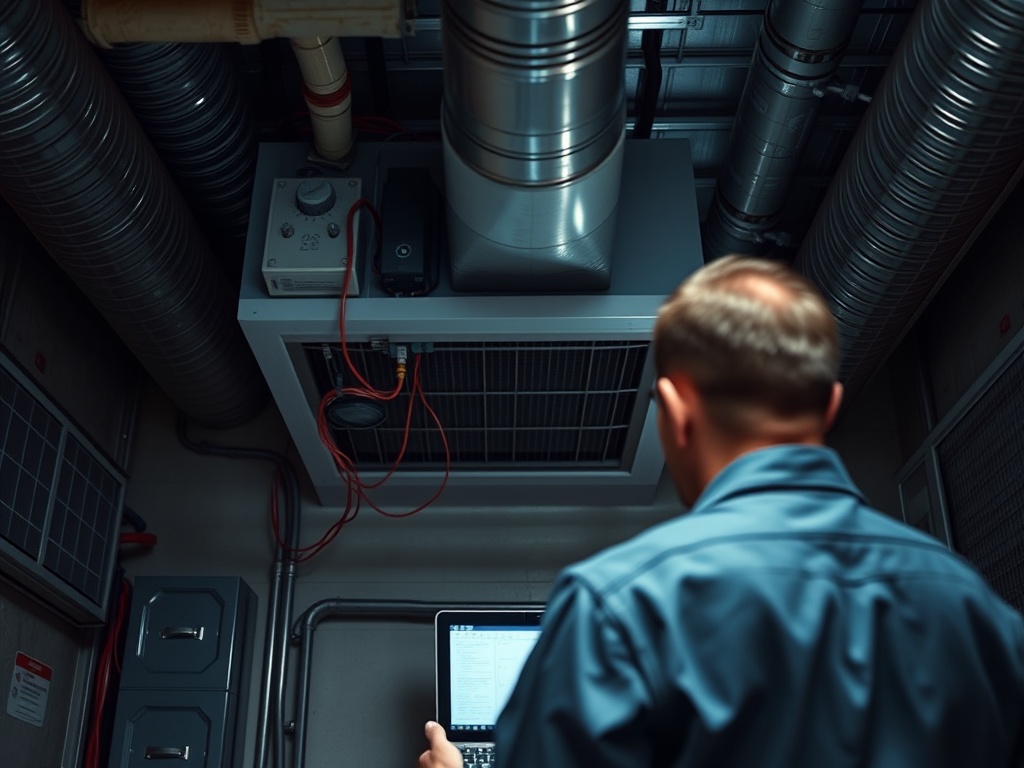
The Biggest Economizer Problems Are Often Mechanical or Control Related
A perfectly written control sequence does not help if a damper is stuck, an actuator is disconnected, or a sensor is badly out of calibration. Common failure modes include:
- Outdoor-air dampers that do not open fully when commanded.
- Dampers that remain open when outdoor conditions are unfavorable.
- Broken linkages or failed actuators.
- Temperature or humidity sensors that have drifted.
- Minimum ventilation settings that are confused with economizer positions.
- Control sequences that do not coordinate with mechanical cooling.
- Dirty filters or airflow problems that change delivered air volume.
PNNL’s O&M guidance emphasizes functional components because economizer faults can persist unnoticed. A system may still heat and cool, but it can use more energy than necessary or bring in outdoor air at the wrong time.
Measuring Savings Requires a Baseline
It is tempting to assign a universal percentage to economizer savings, but that would ignore climate, equipment, schedule, load, and control performance. A more defensible approach is to compare operating data.
Facility teams can review outdoor temperature and humidity, mixed-air temperature, damper command and feedback, supply-air temperature, compressor stages, fan operation, and cooling energy over comparable periods. Energy dashboards for HVAC performance can make those operating relationships easier to trend and verify.
DOE guidance on energy-efficient light commercial heating and cooling reinforces the broader principle that equipment efficiency and operating practices need to be considered together. An efficient rooftop unit with a disabled economizer is not operating as designed, while an economizer that over-ventilates under poor conditions can also increase load.
Economizers and Required Ventilation Are Different Functions
Commercial buildings need minimum outdoor air according to applicable ventilation requirements. Economizer mode can increase outdoor air above that minimum when the air is useful for cooling. The two functions often use the same dampers but should not be confused.
This distinction also matters in buildings with large exhaust systems. Makeup air replaces exhausted air for pressure and ventilation purposes, while an economizer increases outdoor air to take advantage of favorable cooling conditions. Their controls can interact, but the design objectives differ.
What Facility Teams Should Trend
A practical economizer dashboard does not need hundreds of points. Start with the points that show whether the sequence is doing what it should:
1. Outdoor-air temperature and, where used, humidity or enthalpy.
2. Return-air and mixed-air temperature.
3. Outdoor-air damper command and position feedback if available.
4. Supply-air temperature.
5. Compressor or cooling-stage status.
6. Fan status and airflow-related alarms.
7. Zone or representative space conditions.
Trend data can reveal a damper that never moves, a sensor that disagrees with nearby measurements, or mechanical cooling that remains active when outdoor air should be carrying more of the load.
Commissioning Matters After Installation and Control Changes
Economizers should be tested through their expected operating modes. That includes minimum ventilation, economizer enable, integrated mechanical cooling if applicable, high-limit shutoff, heating lockout interactions, and alarm behavior.
Testing becomes especially important after controller replacement, rooftop-unit replacement, sensor changes, building-automation upgrades, or major sequence modifications. For older equipment, the wider repair-versus-replacement context may also matter when repeated economizer faults are only one part of declining unit condition.
Treat Economizer Savings as a Verified Operating Result
Economizer cooling can be an effective efficiency measure, but the savings are not automatic. The useful question is not “Does the unit have an economizer?” It is “Does the economizer open at the right conditions, deliver the intended airflow, maintain indoor conditions, and reduce mechanical cooling when expected?”
That question can be answered with functional testing and trend data instead of assumptions.
For informational and educational purposes only; this article does not constitute HVAC, electrical, controls-engineering, code, or legal advice, and economizer settings should be reviewed by qualified HVAC and controls professionals for the specific building.
If your commercial units have economizers, trend outdoor conditions, damper position, mixed-air temperature, and compressor status for several representative weeks and use the data to verify that the cooling sequence is actually working as intended.