Manufacturing areas with substantial process heat need HVAC strategies that address the heat source, worker exposure, ventilation, exhaust, pressure, and production requirements together. The best design is often not simply a larger comfort-cooling system; source capture, heat isolation, stratification control, spot cooling, makeup air, and process-specific ventilation can reduce the load the HVAC system must handle.
- Treat process heat as an engineering load and, where relevant, an occupational heat hazard.
- Control heat as close to the source as practical before relying on room-wide cooling.
- Manufacturing HVAC should be coordinated with exhaust, makeup air, contaminants, worker locations, production schedules, and safety requirements.
Start With the Heat Source, Not the Air Conditioner
Industrial heat can come from ovens, furnaces, motors, compressors, welding, steam, hot product, curing lines, kilns, process piping, or other equipment. Those sources can release sensible heat, radiant heat, moisture, contaminants, or several of these at once.
A load assessment should identify when each source operates, how much heat reaches the occupied zone, where workers stand, whether the heat rises or radiates directly toward them, and what exhaust or ventilation is already present. Those observations determine whether the priority is source removal, shielding, local ventilation, space cooling, or a combination.
ASHRAE’s chapter on industrial air conditioning discusses strategies such as low-level supply air, stratification, spot cooling, makeup air, and heat recovery in industrial spaces. The key point is that industrial HVAC should respond to the process and building geometry rather than applying office-style comfort design by default.
Use the Hierarchy of Controls for Heat Hazards
When process heat creates a worker heat-stress risk, HVAC becomes part of a broader safety program. NIOSH recommends engineering and administrative controls for workplace heat. Its current heat-stress recommendations list engineering approaches such as increasing air velocity, using heat-absorbing or reflective barriers, and reducing steam leaks or humidity.
The NIOSH hierarchy of controls places engineering controls above administrative controls and personal protective equipment because controlling the hazard at or near its source can reduce dependence on worker behavior.
HVAC designers should therefore ask whether the process can be enclosed, insulated, exhausted, relocated, shielded, or scheduled differently before sizing mechanical cooling to absorb all released heat.
Separate Source Control From Comfort Cooling
| Strategy | Primary purpose | Example application |
|---|---|---|
| Local exhaust | Capture heat, vapor, or contaminants near the source | Hood over a hot or contaminant-producing process |
| Radiant shielding | Reduce direct radiant exposure | Barrier between furnace and occupied work zone |
| Spot cooling | Condition occupied work areas instead of the full volume | Air distribution focused on operator stations |
| General ventilation | Dilute or remove building heat where appropriate | High-bay exhaust with planned replacement air |
| Mechanical cooling | Control space temperature and humidity | Production areas with defined environmental limits |
| Heat recovery | Reuse suitable waste heat | Preheating outdoor or process air where practical |
These strategies are not interchangeable. Local exhaust may be needed for contaminants even if the room is cool. Spot cooling may improve worker comfort without controlling product temperature. Mechanical cooling may be necessary for process tolerances even when workers occupy only a small part of the floor.
High-Bay Buildings Can Use Stratification Deliberately
Heat naturally accumulates near the roof in many tall industrial buildings. Mixing all of that hot upper air into the occupied zone can increase the cooling load. Depending on the process, building height, contaminants, and winter operation, a design may allow some thermal stratification while supplying conditioned air lower in the space.
This is not a universal rule. Some facilities need mixing for temperature uniformity, air quality, or process reasons. Large ceiling fans, destratification fans, displacement-style supply, or low-level distribution should be evaluated in the context of the full airflow pattern.
The basic physics remain the same: heat movement, air movement, and surface temperatures determine the load experienced by workers and equipment.
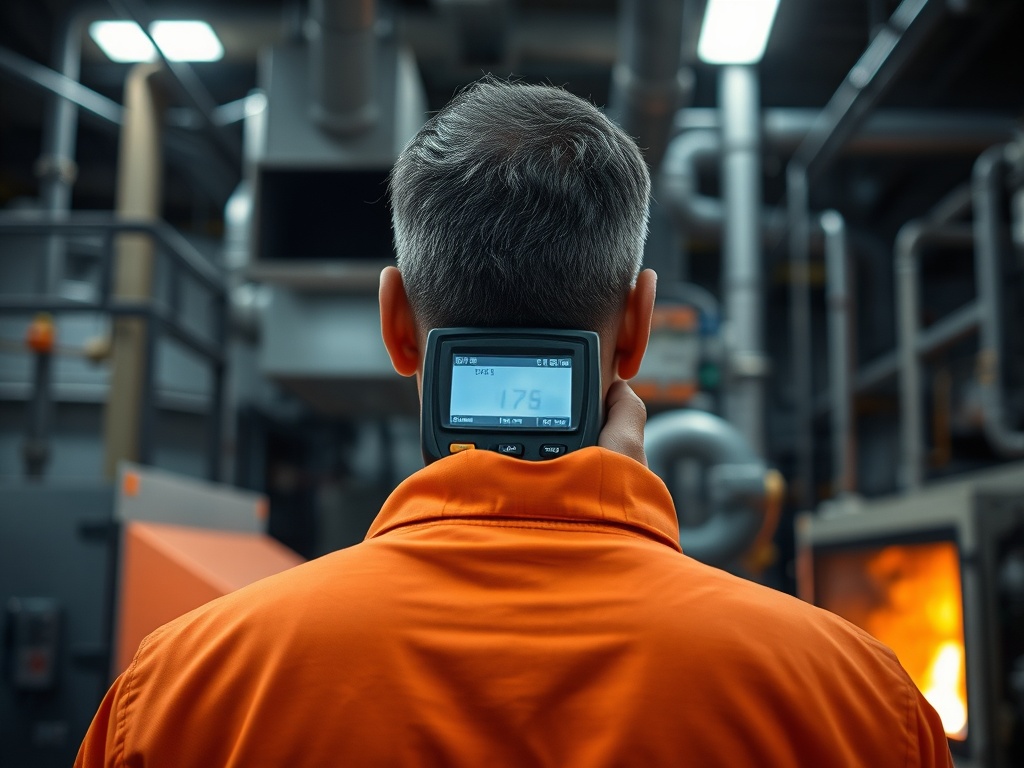
Exhaust Air Requires a Planned Replacement Path
Industrial processes can exhaust large quantities of air. If replacement air is not introduced intentionally, the building may draw uncontrolled outdoor air through doors, dock openings, cracks, or adjacent spaces.
A dedicated makeup air strategy can filter and condition replacement air while supporting desired pressure relationships. ASHRAE notes that makeup air in industrial settings can serve ventilation and pressurization and may need to vary when exhaust systems operate intermittently.
The replacement air itself becomes part of the thermal load. In hot or humid weather, outdoor air may require cooling and dehumidification. In cold weather, heating large exhaust-replacement volumes can be a major energy use.
Do Not Mix Comfort Ventilation With Contaminant Control
A process may release fumes, dust, mist, smoke, or vapors in addition to heat. Those contaminants can require local exhaust, industrial hygiene evaluation, hazardous-material controls, or code-driven ventilation that cannot be reduced simply to save cooling energy.
NIOSH describes engineering controls such as local exhaust ventilation as methods for removing hazards before workers are exposed. HVAC and industrial hygiene teams should coordinate because the air system can affect contaminant capture and worker exposure.
General comfort-cooling calculations should not replace a process hazard assessment.
Use Economizers Carefully in Industrial Buildings
Facilities with high internal heat gains may need cooling even when outdoor air is mild. That creates an opportunity for economizer cooling when outdoor conditions are appropriate.
However, outdoor air may contain humidity, dust, combustion products, or pollutants that matter to the process. An economizer should only increase outdoor airflow when the controls, filtration, and process requirements allow it.
For plants with sensitive products or controlled humidity, the economizer high limit and sequence may need tighter criteria than an ordinary office rooftop unit.
Match Controls to Production Schedules
Manufacturing loads can change sharply by shift, product run, machine status, or batch process. A fixed HVAC schedule may cool an empty production area or fail to respond when a heat-intensive line starts early.
Useful control inputs can include equipment status, space temperature, humidity, exhaust operation, outdoor conditions, occupancy, and process schedules. Advanced systems may trend these points through building automation or energy dashboards that help facility teams manage HVAC performance.
The objective is not automation for its own sake. Controls should make operating states visible and predictable so facility teams can tell why fans, dampers, cooling stages, or makeup air are running.
Commission Under Real Production Conditions
Testing an industrial HVAC system during a quiet weekend may not reveal what happens at full production. Commissioning should include representative process loads, exhaust combinations, door activity, worker occupancy, and seasonal conditions where practical.
Measure temperatures in the occupied zone, not only at the thermostat. Review air velocities where workers are stationed. Verify pressure relationships and local exhaust capture. Check whether the makeup air reaches the intended area and whether cooling equipment maintains process and comfort requirements without unstable cycling.
Build the Decision Around Operations and Safety
The best manufacturing HVAC strategy is the one that supports the actual process while controlling heat exposure and energy use within the facility’s requirements. That may mean cooling the whole space, but it may also mean removing heat at the source, separating hot processes, conditioning makeup air, using spot cooling, or changing air distribution.
For informational and educational purposes only; this article does not constitute HVAC, industrial-hygiene, occupational-safety, engineering, code, or legal advice. Manufacturing facilities should use qualified HVAC engineers, safety professionals, and relevant authorities for process-specific design decisions.
Begin by mapping process heat sources, worker locations, exhaust airflows, and production schedules; that map gives the design team a better basis for selecting source control, ventilation, makeup air, and cooling than simply increasing equipment tonnage.