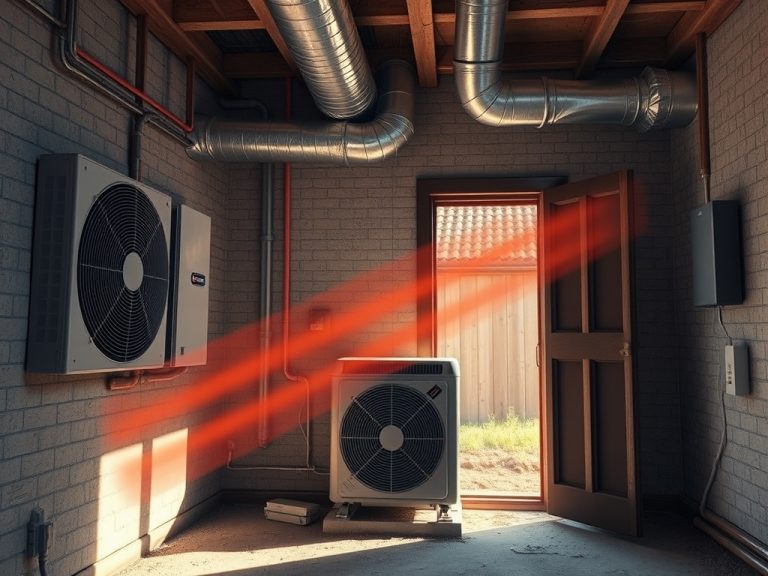
Homes near busy roads, demolition, excavation, or active construction can face higher outdoor particle loads than quieter locations. HVAC can help reduce indoor particle exposure through appropriate filtration, controlled ventilation, air sealing, and maintenance, but the best approach starts with source control and keeping polluted outdoor air from entering uncontrolled paths.
- HVAC filters can reduce airborne particles, but they cannot remove every pollutant or replace source control.
- Use the highest-efficiency filter the system can accommodate, keep it changed, control uncontrolled air leakage, and be thoughtful about when and where outdoor air enters the home.
- During heavy dust events, faster filter loading and more frequent inspection may be necessary.
Outdoor Dust Becomes an Indoor Problem Through Multiple Paths
Traffic and construction particles can enter when doors and windows open, through cracks in the envelope, through mechanical ventilation, or on clothing and shoes. Some indoor activities also generate particulate matter, so visible dust in a home does not prove that all of it came from outside.
EPA’s guidance on sources of indoor particulate matter recommends source control, cleaning, HVAC filter replacement, and appropriate filter upgrades. Filtration works best as one layer of a broader strategy.
Start With the Filter the System Can Actually Support
A more efficient filter can capture a larger share of certain particle sizes, but filtration also creates resistance to airflow. The filter choice has to match the furnace or air handler, filter rack, fan capability, and duct system.
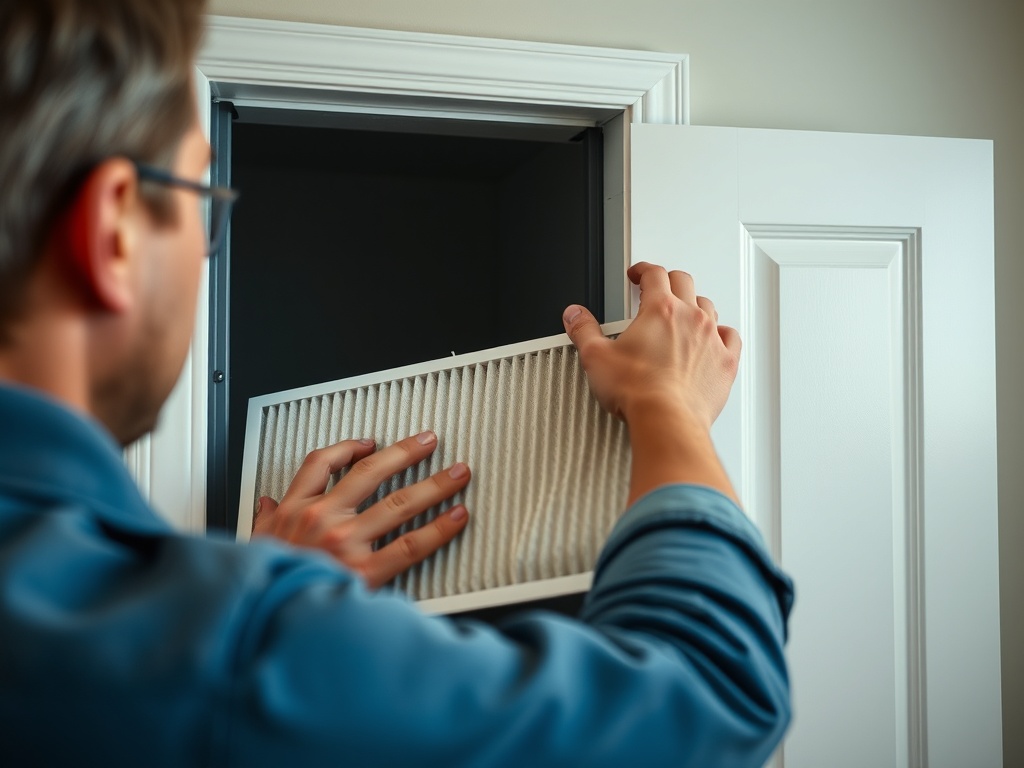
EPA’s current Guide to Air Cleaners in the Home recommends a MERV 13 filter, or as high a rating as the system can accommodate. It also advises consulting an HVAC professional when determining what the system can support.
That qualification matters. Installing a restrictive filter in a poorly sized filter slot can reduce airflow, increase pressure drop, and create comfort or equipment problems. In some homes, improving the filter cabinet or increasing filter surface area may be a better solution than forcing a dense filter into a small rack.
Expect Filters to Load Faster During Dust Events
Manufacturer replacement intervals are general starting points. A home next to grading, roadwork, wildfire ash, or repeated dust-producing construction may load a filter faster than a home in cleaner conditions.
Inspect the filter periodically rather than assuming a calendar interval will always be correct. Signs of heavy loading include a visibly dirty media surface, reduced airflow, or a pressure-drop reading that exceeds the equipment or filter specification when measured by a technician.
Seal Uncontrolled Air Paths Before Relying Only on Filtration
A central filter can only clean air that passes through the HVAC return path while the blower operates. Dust entering around leaky windows, doors, attic penetrations, recessed fixtures, crawlspaces, or duct leaks can bypass that path.
Air sealing can reduce uncontrolled infiltration, but it should be planned with ventilation, combustion safety, moisture, and building pressure in mind. Tightening a home without considering those interactions can create other problems.
For homes with mechanical ventilation, the goal is not necessarily to shut outdoor air off. It is to bring outdoor air in through a controlled, filtered route when outdoor conditions are acceptable.
Use Portable Air Cleaners as a Supplemental Layer
Portable air cleaners can add particle removal in bedrooms, living areas, or other occupied rooms. EPA notes that portable air cleaners and central HVAC filters can reduce indoor air pollution but cannot remove all pollutants.
When selecting a portable unit, match its clean air delivery rate to the room size and the particle concern. Avoid devices that intentionally produce ozone. Placement also matters: a unit blocked by furniture or placed where airflow cannot circulate through the room will be less useful.
| Strategy | What it helps with | Main limitation |
|---|---|---|
| Central HVAC filtration | Particles in air returning through the system | Works only when air passes through the filter |
| Portable air cleaner | Additional room-level particle removal | Covers a limited area and needs its own maintenance |
| Air sealing | Reduces uncontrolled outdoor entry | Must be coordinated with ventilation and combustion safety |
| Controlled ventilation | Provides deliberate outdoor-air exchange | Outdoor air quality and filtration still matter |
| Cleaning | Removes settled dust from surfaces | Can resuspend particles if done poorly |
Construction Dust Requires Attention to the HVAC System Itself
During remodeling inside the home, isolate the work area as much as practical and keep dust from being pulled into return grilles. Contractors may use temporary barriers, local exhaust, and negative-pressure strategies appropriate to the work.
If dust reaches the HVAC system, inspect filters, return grilles, accessible coil surfaces, blower compartments, and ducts as appropriate. Do not assume that visible register dust means the entire duct system needs cleaning. The cause and extent should be assessed first.
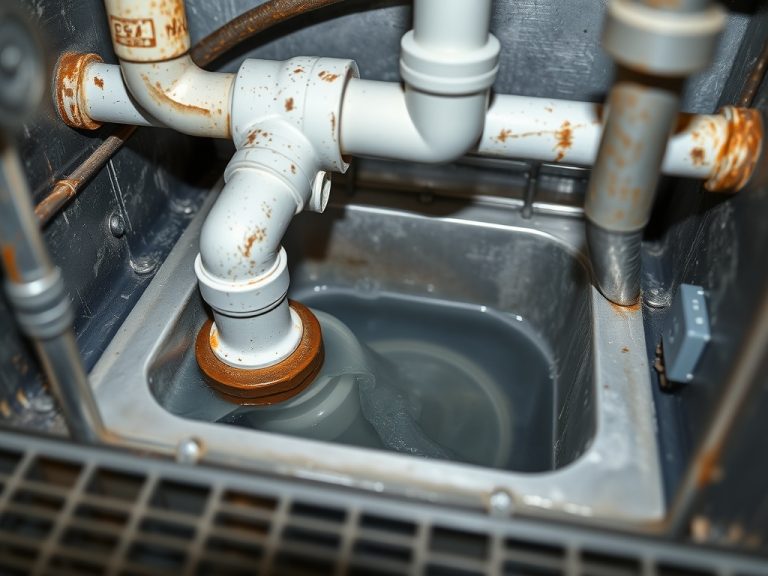
Dust accumulation can also wash into the cooling drain pan during condensate production. That connection is why drain pan maintenance deserves extra attention after a heavy dust event.
Be Selective About Outdoor-Air Ventilation During Short Dust Peaks
Ventilation is generally important for indoor air quality, but outdoor air is not equally clean at every hour. During short periods of nearby demolition, paving, dust storms, or heavy construction activity, a homeowner may need to reduce avoidable window opening and rely more on filtered recirculation, subject to the home’s ventilation and safety needs.
Once outdoor conditions improve, normal ventilation can resume. Homes with dedicated ventilation equipment may have filter options or operating modes that should be set according to manufacturer guidance.
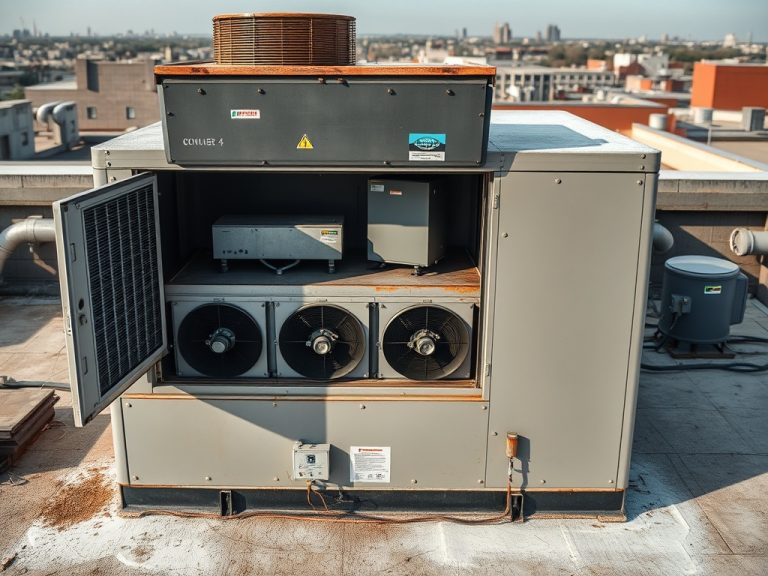
Commercial buildings use more complex outdoor-air strategies, including economizer cooling when outdoor conditions are suitable. The residential lesson is similar: outdoor air can be useful, but it should be introduced intentionally and with awareness of its temperature, moisture, and pollutant content.
Watch Pressure and Airflow After Filter Upgrades
If a higher-efficiency filter is installed, pay attention to airflow and comfort. Reduced airflow at multiple registers, unusual blower noise, coil icing, or longer run times can indicate that the system needs evaluation.
A technician can measure total external static pressure and pressure drop across the filter. Those measurements are more informative than guessing based on filter appearance alone.
This is another example of basic heat-transfer physics: the HVAC system needs enough airflow across the coil or heat exchanger to move thermal energy effectively, even when the original problem begins with dust.
Cleaning Practices Can Reduce Resuspension
Settled dust becomes airborne again when dry sweeping, aggressive dusting, or vacuum leakage sends particles back into the room. EPA recommends frequent cleaning and suggests damp dusting and HEPA-filtered vacuuming as ways to reduce resuspension.
If the dust may contain lead, asbestos, silica, or another hazardous material, ordinary housekeeping is not enough. Specialized guidance and qualified remediation may be required.
Build a Dust-Event Checklist
Before nearby construction begins, confirm that the HVAC filter fits correctly, seal obvious bypass gaps at the filter rack, and establish a baseline for normal airflow. During the work, inspect the filter more often, keep windows closed when dust is visibly heavy, and use portable filtration where it provides value. Afterward, replace or service filters as needed and inspect the cooling coil and condensate area if substantial dust entered the system.
The goal is not to create a perfectly particle-free home. It is to reduce unnecessary entry, capture particles that do enter, and prevent the HVAC system from becoming an additional distribution path.
For informational and educational purposes only; this article does not constitute HVAC, environmental-health, remediation, structural, or legal advice. Consult qualified HVAC and environmental professionals for system-specific or hazardous-dust concerns.
If nearby traffic or construction is noticeably increasing indoor dust, begin with filter fit and condition, controlled air entry, and a simple inspection schedule before investing in more complex air-cleaning equipment.