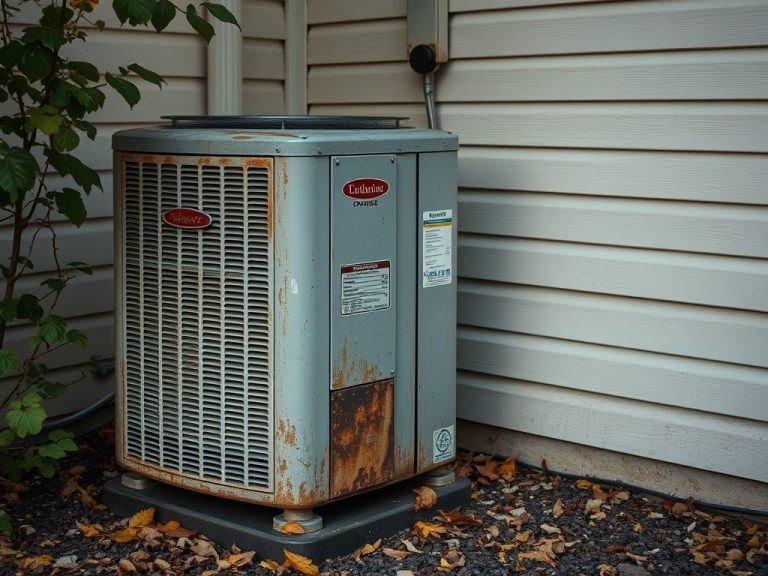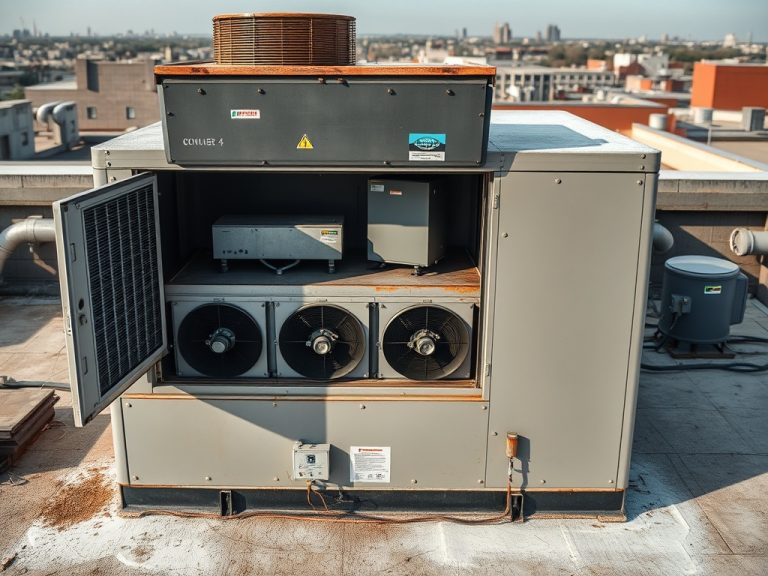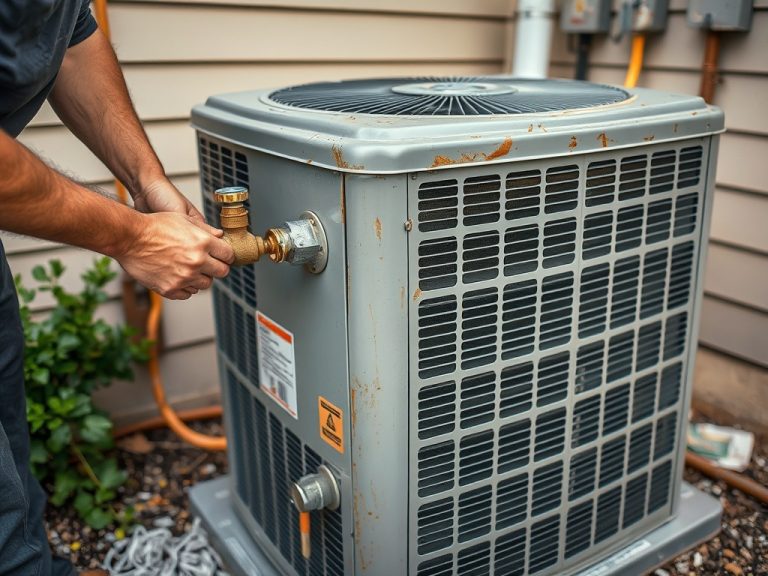
An HVAC drain pan collects condensate produced when a cooling coil removes moisture from the air and directs that water toward the condensate drain. Routine maintenance should catch standing water, sludge, biological growth, corrosion, cracks, poor slope, clogged drains, dry traps, and signs that water has overflowed before those conditions damage equipment or nearby building materials.
- A drain pan is a small component with a large moisture-management job.
- Water should collect, flow to the drain, and leave the system without pooling or spilling into the cabinet or building.
- Persistent standing water, repeated clogs, rust, overflow marks, or a wet area around the unit deserve attention before they become a larger maintenance or indoor-air-quality problem.
Why Cooling Systems Produce Condensate
Warm air can hold more moisture than cooler air. When humid indoor air passes over a cold evaporator coil, the air temperature can fall below its dew point and water condenses on the coil surface. That moisture drips into a pan and is carried away through a drain line or condensate pump.
Because condensate is created during ordinary cooling operation, the drain system needs to work whenever moisture is being removed. A blocked or poorly pitched drain can turn a normal process into a water leak even though the refrigeration cycle is still operating.
What a Proper Drain Pan Should Do
EPA moisture-control guidance recommends that cooling-coil drain pans slope toward their drain and avoid standing water. The agency’s Moisture Control Guidance for Building Design, Construction and Maintenance also calls for accessible drains and traps that can be inspected and cleaned.
In practical terms, a healthy condensate path has several characteristics:
- The pan catches water coming off the coil.
- Water moves toward the drain instead of remaining in low spots.
- The drain line is open and properly connected.
- Traps, vents, and pumps are configured as required for the equipment and pressure conditions.
- The pan and nearby cabinet surfaces do not show ongoing leakage or overflow.
- Maintenance access is adequate for inspection and cleaning.
These are principles. The exact drain arrangement varies by furnace, air handler, fan coil, rooftop unit, mini-split, and local code.
Early Warning Signs Maintenance Should Find
A routine service visit should not wait for water to reach the ceiling or floor. Several smaller clues can show that condensate management is deteriorating.
| Observation | What it may indicate | Appropriate response |
|---|---|---|
| Standing water in the pan | Poor slope, clog, blocked outlet, pump issue | Inspect drainage path and correct the cause |
| Slime or debris | Biological buildup or accumulated dirt | Clean using equipment-appropriate procedures |
| Rust or corrosion | Repeated moisture exposure or pan deterioration | Evaluate pan integrity and source of moisture |
| Water marks outside the pan | Previous overflow or splash | Check drain capacity, level, coil condition, and cabinet |
| Repeated float-switch trips | Water is not leaving fast enough | Diagnose the drain, trap, pump, and downstream piping |
| Musty odor near the unit | Moisture or microbial growth may be present | Inspect pan, coil, drain, insulation, and nearby materials |
These observations are not a diagnosis by themselves. They are reasons to inspect the complete condensate system.
Clogged Drains Are Common, but the Cause Still Matters
A drain line can become restricted by sludge, dust, biological material, debris, or a physical piping problem. Clearing the line may restore flow, but repeated clogs suggest that the technician should look beyond the immediate blockage.
Questions worth asking include whether the drain has adequate pitch, whether the trap is correct, whether the pan slopes properly, whether the coil is shedding unusual debris, whether the line terminates correctly, and whether access permits proper cleaning.
ENERGY STAR includes checking and inspecting the condensate drain in its typical HVAC maintenance checklist. That is a useful reminder that drainage is not an optional housekeeping task. It is part of normal system maintenance.
Standing Water Is More Than a Leak Risk
Water that remains in a drain pan can support biological growth and contribute to indoor-air-quality concerns. EPA guidance for building occupants notes that poorly maintained equipment with water reservoirs or drain pans can create moisture conditions that support biological contaminants. Its mold guidance for HVAC systems specifically recommends routine checks of drain or condensate pans because pans that do not drain properly can become reservoirs for mold and bacteria.
That does not mean every dirty pan has created a building-wide mold problem. Moisture, nutrients, temperature, and time all influence biological growth. Do not allow chronic standing water and dirt to remain where conditioned air passes nearby.
Drain Problems Can Be Confused With Refrigerant or Airflow Problems
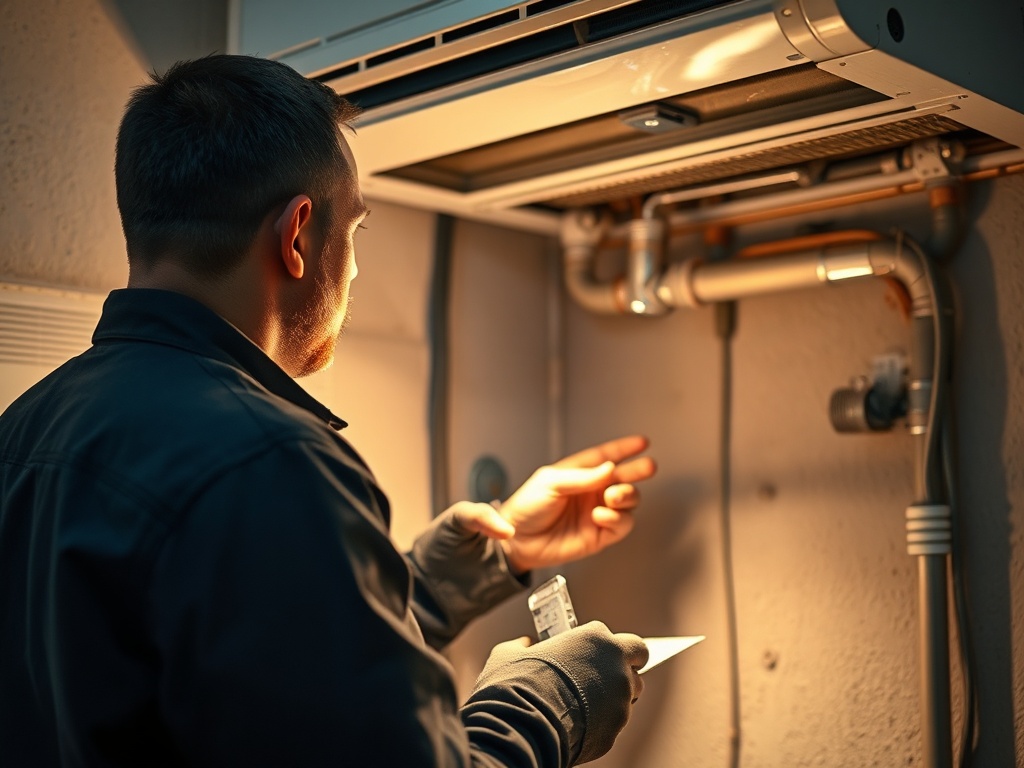
Water around an air handler does not always come from a blocked drain. A frozen evaporator coil can thaw and release more water than the pan or drain handles normally. Insulation problems can cause condensation on cold cabinet surfaces or refrigerant lines. High humidity, unusually low airflow, a dirty coil, or damaged drain connections can also change the moisture pattern.
If the coil is icing, cooling is weak, or refrigerant lines show unusual frost, it may be useful to review what a refrigerant leak can look like rather than assuming the drain is the only issue.
The safest approach is to trace the water to its source before choosing a fix.
Dusty Environments Put More Pressure on Coils and Drainage
Homes near active construction, high-traffic roads, or frequent outdoor dust can load filters and indoor surfaces faster. If dust bypasses the filter or accumulates on the coil, some of that material can eventually wash into the pan with condensate.
Good filtration, source control, cleaning, and appropriate maintenance intervals can reduce that burden. The broader strategy is covered in HVAC approaches for homes near high traffic or construction dust.
Commercial buildings with outdoor-air economizers also need clean, functional drainage where cooling coils remove moisture. If outdoor-air dampers or controls change the amount of humid air passing through the system, moisture loads can change as well. Facility teams evaluating economizer cooling should include condensate management in the maintenance picture.
A Sensible Drain-Pan Inspection Sequence
For a qualified technician, a useful inspection process is to follow the water path from where condensate forms to where it is discharged.
1. Inspect the coil area and pan for debris, corrosion, standing water, and overflow marks.
2. Verify that the pan is intact and drains from the intended low point.
3. Check the primary drain opening for restriction.
4. Inspect traps, vents, cleanouts, pumps, and downstream piping as applicable.
5. Test safety switches and auxiliary drainage according to the equipment design.
6. Confirm that water discharges to an approved location under local requirements.
7. Look for wet insulation, cabinet corrosion, ceiling stains, or flooring damage that indicates prior overflow.
Homeowners can safely observe visible water and report symptoms, but opening electrical compartments, using chemicals, disassembling pumps, or working around energized equipment should be left to qualified service personnel.
Catch the Moisture Problem Before It Leaves the Cabinet
Drain-pan maintenance is most valuable when it identifies a problem while the water is still contained. Once overflow reaches insulation, drywall, ceilings, flooring, or electrical components, the repair can extend far beyond the HVAC system.
A clean, draining pan is not a guarantee that every moisture issue is solved, but it is a basic condition that routine cooling maintenance should verify.
For informational and educational purposes only; this article does not constitute HVAC, electrical, structural, mold-remediation, or legal advice, and equipment-specific drainage issues should be reviewed with a licensed HVAC contractor or technician.
At the next cooling-system service, ask the technician to show you the primary pan, drain, trap or pump, and overflow protection so you know what normal drainage looks like before a leak occurs.