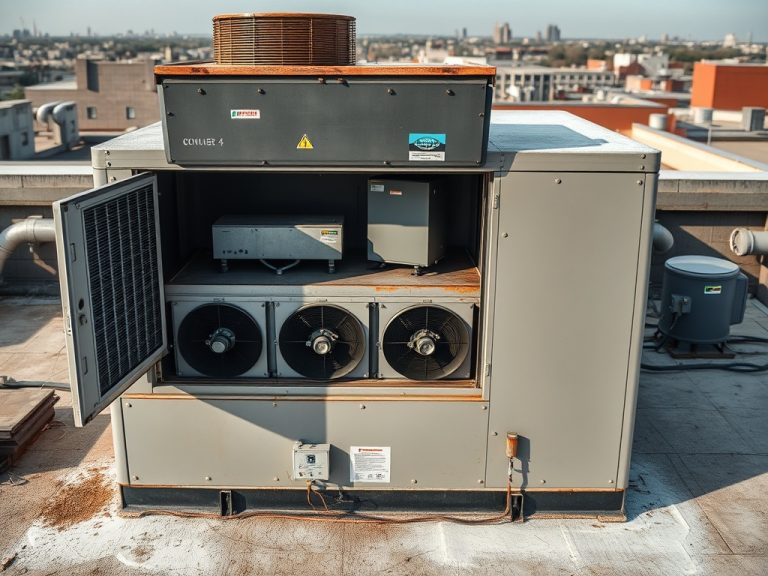
Every HVAC system works by controlling the movement of heat. Heating equipment adds or transfers heat into a space, cooling equipment removes heat from it, and ventilation and airflow determine how that thermal energy is distributed through the building.
- HVAC is fundamentally a heat-transfer system, not simply a machine that “makes hot or cold air.”
- Conduction, convection, radiation, and refrigerant phase changes all affect how quickly a building gains, loses, or moves heat.
- Understanding the path heat takes makes HVAC sizing, comfort complaints, maintenance, and efficiency choices easier to interpret.
Heat Always Moves Along a Temperature Difference
The U.S. Department of Energy describes heating and cooling around a basic physical principle: heat transfers from a warmer area toward a cooler one. That temperature difference is the driving force behind what an HVAC system must overcome or take advantage of. The DOE’s overview of heating and cooling is a useful reference because it puts heat transfer at the center of HVAC operation rather than treating heating and air conditioning as unrelated processes.
In winter, a building loses heat through its walls, windows, roof, air leakage, and ventilation. The heating system must replace enough of that lost heat to maintain the indoor setpoint. In summer, solar gain, outdoor air, occupants, lighting, appliances, and the building envelope add heat indoors. The cooling system must remove that heat at a rate that keeps indoor temperature and humidity within acceptable limits.
Four Heat-Transfer Mechanisms Show Up in HVAC Work
The mechanisms overlap in real buildings, but separating them makes system behavior easier to understand.
| Mechanism | Plain-English meaning | Common HVAC example |
|---|---|---|
| Conduction | Heat moves through a solid material | Heat passing through a wall, metal duct, coil tube, or window |
| Convection | Heat moves with a fluid such as air or water | Supply air warming a room or chilled water carrying heat away |
| Radiation | Heat moves by electromagnetic energy | Sunlight heating a roof or a warm surface radiating toward a cooler one |
| Phase-change heat transfer | A fluid absorbs or releases heat as it changes state | Refrigerant evaporating indoors and condensing outdoors in cooling mode |
Conduction Connects the Building Envelope to HVAC Load
Conduction is easy to picture when one side of a wall is hot and the other side is cooler. Heat moves through the materials separating those two conditions. Insulation slows that transfer, but it does not stop it completely. Windows, framing members, metal penetrations, ductwork, and equipment cabinets can all provide paths for conductive heat flow.
For homeowners, this explains why a room can remain uncomfortable even when supply air feels adequately heated or cooled. If the room has large glazing areas, weak insulation, or an exposed roof, its heat gain or heat loss can differ substantially from the rest of the house. The HVAC system then has to respond to the building’s load, not merely the thermostat setting.
Convection Is How HVAC Distributes Much of Its Heating and Cooling
Forced-air systems depend heavily on convection. A blower moves conditioned air across a heat exchanger or coil and then through ducts into occupied rooms. Hydronic systems move thermal energy through water before radiators, fan coils, or radiant components transfer it into the space.
Airflow therefore matters to heat transfer. A dirty filter, closed register, restricted return, fouled coil, or poorly balanced duct system can reduce the amount of air moving across a heat-transfer surface. The equipment may still run, but the building may receive less useful heating or cooling where it is needed.
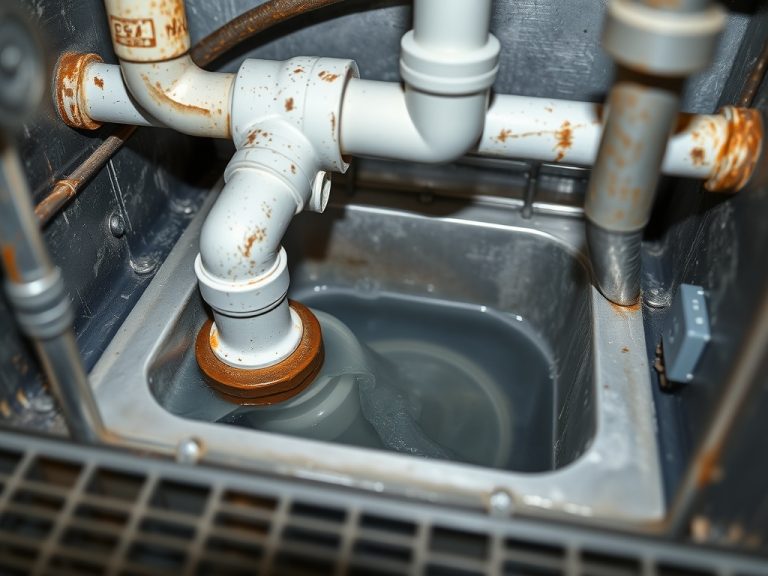
This relationship also helps explain why routine issues such as drain pan and condensate maintenance belong in a broader discussion of system performance. Moisture removal occurs at the cooling coil, and condensate management must work correctly while heat and humidity are being removed from the air.
Refrigeration Moves Heat Instead of Creating “Cold”
An air conditioner does not generate cold as a substance. It uses a refrigeration cycle to absorb heat indoors and reject it outdoors. The DOE’s Energy Saver cooling overview explains that air conditioners transfer heat from the home’s interior to the outside environment. The evaporator, compressor, condenser, expansion device, fans, and refrigerant all support that transfer.
At the indoor evaporator coil, refrigerant absorbs heat as it changes state. The compressor raises the refrigerant’s pressure and temperature so that the collected heat can be released through the outdoor condenser. The refrigerant then returns to a lower-pressure condition and repeats the cycle.
Heat pumps use the same broad principle but can reverse the direction of heat movement. DOE guidance on heat pump systems notes that heat pumps transfer heat rather than relying only on direct heat generation. In cooling mode they move heat outdoors; in heating mode they move available heat from outside toward the conditioned space.
Airflow, Heat Transfer, and Comfort Are Tied Together
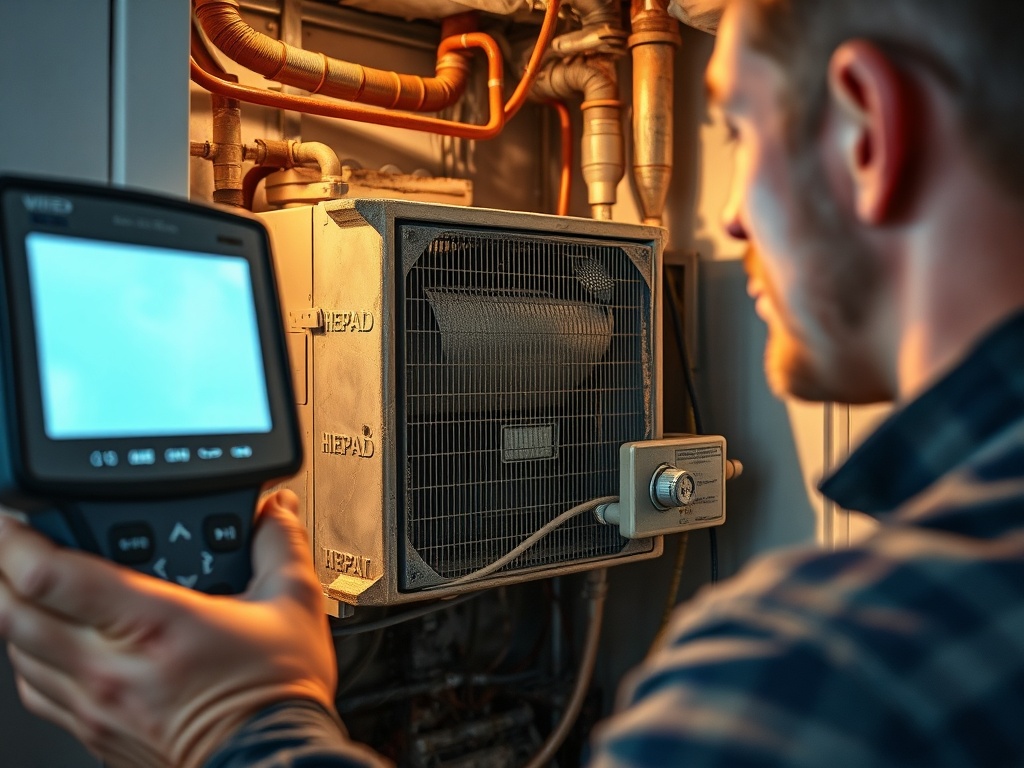
Heat-transfer capacity on paper does not guarantee comfort in every room. The system also needs a practical path for moving energy between equipment and occupied spaces. Supply airflow must reach the room, return airflow must get back to the equipment, and duct losses should be controlled.
A house with correct equipment capacity can still develop hot and cold rooms if air distribution is poor. A commercial air handler can also struggle if pressure relationships or outdoor-air requirements change. Buildings with large exhaust loads may need dedicated makeup air equipment so that replacement air is introduced intentionally rather than pulled through doors, cracks, and uncontrolled openings.
The same principle appears in commercial free cooling. An air-side economizer can use favorable outdoor conditions to meet part of a cooling load with less mechanical refrigeration, but its dampers, sensors, controls, and air-handling components still have to manage heat and airflow correctly.
Why Heat Transfer Matters When Sizing Equipment
HVAC sizing is an exercise in estimating how much heat a building gains or loses under design conditions. Square footage alone is not enough. Orientation, insulation, windows, air leakage, occupancy, internal loads, duct location, climate, and ventilation can all affect the result.
Oversized equipment can create its own comfort problems. For example, a cooling system that satisfies the thermostat very quickly may run shorter cycles, which can reduce the time available for moisture removal. Undersized equipment may run for long periods during design weather and still fail to maintain the desired indoor condition. The correct assessment is therefore based on load and system design rather than a general “bigger is better” rule.
For beginners, the useful takeaway is that equipment capacity should match the building’s heat-transfer demand. A licensed HVAC professional can perform the load calculations and airflow measurements needed for a specific property.
A Practical Mental Model for Homeowners and Facility Teams
When evaluating comfort or performance, trace the process in order. First identify the unwanted heat gain or heat loss. Then consider how the HVAC system is supposed to absorb, release, or redistribute that heat. Next check whether airflow and controls are supporting the intended process. Finally, separate simple observations from work that requires instruments, electrical testing, refrigerant handling, combustion analysis, or system-specific calculations.
This framework is educational, not a substitute for diagnosis. HVAC equipment can involve high voltage, moving parts, combustion, pressurized refrigerant, drainage, and code requirements that should be handled by qualified professionals.
For informational and educational purposes only; this article does not constitute HVAC, electrical, structural, or legal advice, and system-specific decisions should be reviewed with a licensed HVAC contractor or technician.
Use the heat-transfer framework as your starting point: identify where heat is entering, leaving, or failing to move, then have a qualified professional verify the equipment and airflow conditions when the cause is not safely observable.