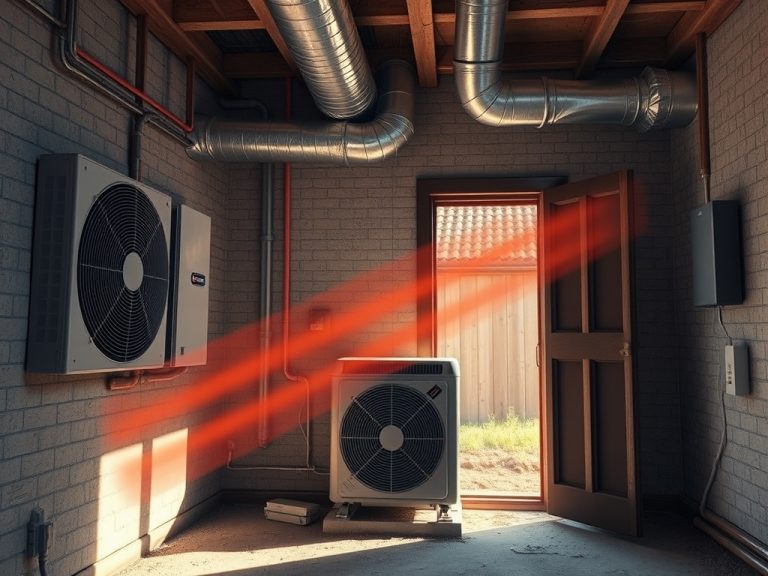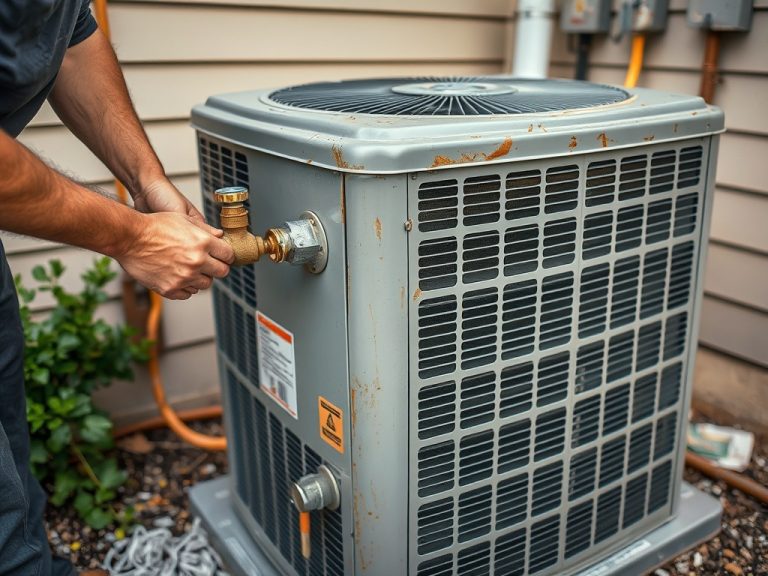
A makeup air unit brings outdoor air into a building to replace air that is being mechanically exhausted or otherwise removed. Buildings with large kitchen hoods, process exhaust, laboratory exhaust, industrial ventilation, or other high exhaust loads may need dedicated replacement air so pressure, comfort, ventilation, and equipment operation remain manageable.
- Makeup air is replacement air, not simply “extra fresh air.”
- A dedicated unit can filter and condition outdoor air before supplying it to spaces that would otherwise become negatively pressurized as exhaust systems remove air.
- The correct airflow rate, conditioning capacity, controls, discharge location, and code requirements depend on the building and its exhaust systems.
What a Makeup Air Unit Actually Does
ASHRAE defines makeup air as outdoor or transfer air intended to replace air that is exhausted or lost from a building. A makeup air unit, often shortened to MAU, is an air-handling unit that provides outdoor air for that purpose and may heat, cool, dehumidify, humidify, or filter the incoming air depending on the application.
This distinction matters because exhaust creates an air balance problem. If a restaurant hood removes a large volume of air, that air must come from somewhere. Without intentional replacement, the building may pull air through doors, cracks, loading areas, wall penetrations, adjacent spaces, or other uncontrolled paths. That can affect comfort, door operation, contaminant movement, combustion safety, and the workload on heating and cooling equipment.
A makeup air unit gives designers and facility teams a controlled path for that replacement air.
Makeup Air, Ventilation Air, and DOAS Are Related but Not Identical
These terms overlap, yet they describe different design goals.
| Term | Primary purpose | Typical relationship to the rest of HVAC |
|---|---|---|
| Makeup air | Replace exhausted or lost air | Often tracks or offsets exhaust airflow |
| Ventilation air | Provide outdoor air for occupants and indoor air quality | Sized according to applicable ventilation requirements |
| Dedicated outdoor air system (DOAS) | Condition and deliver outdoor ventilation air separately from space sensible loads | Works alongside local or central heating/cooling equipment |
ASHRAE’s handbook chapter on ventilation and infiltration explains that a unit supplying 100 percent outdoor air to offset exhausted air is typically called a makeup air unit. A DOAS also supplies 100 percent outdoor air, but its design objective may be broader, such as managing required ventilation and outdoor-air latent load across multiple spaces.
Why Negative Building Pressure Can Become a Problem
When exhaust exceeds intentional supply, indoor pressure can fall below outdoor pressure. Air then tends to enter through available openings. A slight pressure difference may be part of a deliberate design in certain rooms, but uncontrolled negative pressure across a building can create operational issues.
ASHRAE notes that makeup air systems can be used to prevent negative pressure and can be controlled in response to exhaust flow. Its chapter on makeup air units also describes units that condition incoming air and support ventilation, pressurization, or contaminant-control goals.
Buildings Most Likely to Need Dedicated Replacement Air
A small office with modest restroom exhaust has a very different air-balance problem from a commercial kitchen or manufacturing facility. Dedicated makeup air becomes more relevant when exhaust volumes are large, variable, continuous, or tied to safety and process requirements.
Common examples include:
- Commercial kitchens with high-capacity cooking exhaust hoods.
- Manufacturing areas with process exhaust, welding capture, dust collection, or fume extraction.
- Laboratories and technical rooms that exhaust air to control contaminants.
- Buildings with large laundry, drying, or specialty process exhaust systems.
- Facilities where multiple exhaust fans can operate at the same time.
- Spaces that must maintain a defined pressure relationship with adjacent areas.
Some applications are governed by mechanical, fire, energy, health, or process-specific requirements. Local code adoption and project conditions matter, so no single airflow rule should be applied across all buildings.
Conditioning the Replacement Air Is Often the Hard Part
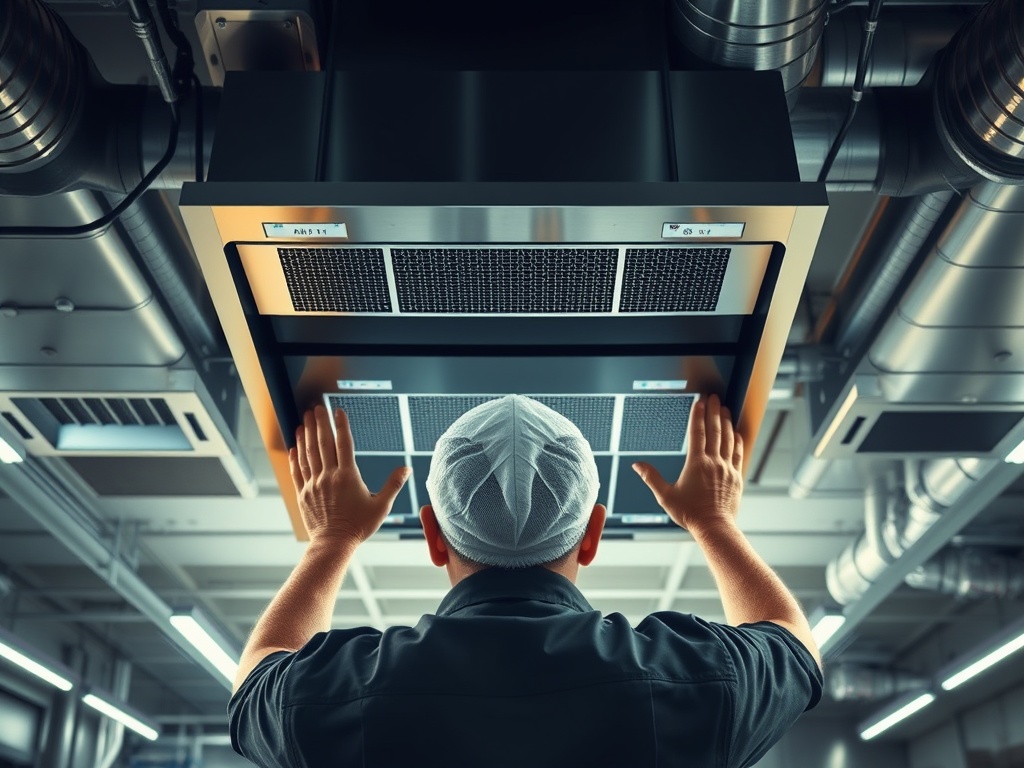
Bringing outdoor air inside changes the building load. On a hot, humid day, makeup air may add both sensible heat and moisture. In cold weather, it can introduce a large heating load. In dusty or polluted environments, filtration and intake location also become important.
A unit may therefore need heating, cooling, dehumidification, humidification, filtration, or energy recovery. The required combination depends on climate, process needs, indoor setpoints, exhaust operation, and the way the makeup air is distributed.
This is a useful application of the basic principles described in how heat transfer powers HVAC systems. Outdoor air is not thermally neutral just because it is needed for pressure balance. Once it enters the system, the HVAC design must account for the heat and moisture it carries.
Controls Should Follow the Exhaust Strategy
A makeup air unit that runs independently from the exhaust it is supposed to replace can create new problems. For constant-volume exhaust, fixed makeup airflow may be appropriate. For variable exhaust, the replacement air may need to track fan status or airflow so the building does not swing between positive and negative pressure.
Controls can involve fan interlocks, airflow stations, damper position, pressure sensors, discharge-air temperature, occupancy schedules, or building automation logic. The specific sequence should be commissioned and tested under the operating combinations that matter, not only when one fan is running.
Facility teams should also consider what happens during startup, shutdown, fire alarm conditions, economizer operation, and equipment faults. A pressure problem that appears only during certain sequences may be a control issue rather than a capacity issue.
Outdoor-Air Loads Affect Energy Use
Conditioning replacement air can be a substantial load when large exhaust volumes operate for long periods. Engineers may evaluate scheduling, heat recovery, airflow controls, and equipment efficiency without reducing ventilation or process exhaust below what the building requires. Commercial systems may also use economizer cooling when outdoor conditions are suitable, although economizers and makeup air serve different purposes.
What to Ask Before Selecting a Makeup Air Unit
A useful design discussion starts with measured or documented airflow, not unit catalog size alone. Owners and facility teams can ask:
1. What exhaust systems will this unit replace, and what are their minimum and maximum airflows?
2. What building pressure relationship is required during normal operation?
3. Does the outdoor air need heating, cooling, dehumidification, humidification, or special filtration?
4. How will the unit track variable exhaust or occupancy?
5. Where will the outdoor intake and supply discharge be located?
6. What happens if the makeup air fan, exhaust fan, sensor, or damper fails?
7. Which mechanical, fire, energy, health, or process standards apply in this jurisdiction?
Those questions also help during procurement. Payment terms and project milestones should be tied to a clear scope, equipment schedule, controls sequence, startup work, and commissioning requirements, which is why it is useful to understand normal HVAC installation payment schedules before signing a major equipment contract.
When Dedicated Makeup Air Is the Right Design Question
The practical trigger is not a particular building type by itself. The trigger is an air-balance need: significant exhaust is leaving the building, and the replacement path needs to be controlled. From there, a designer determines the airflow, conditioning, filtration, controls, distribution, and code requirements appropriate to the facility.
For informational and educational purposes only; this article does not constitute HVAC, electrical, structural, fire-code, health-code, or legal advice, and building-specific decisions should be reviewed by qualified HVAC design professionals and the authority having jurisdiction.
If a building has large or variable exhaust, start by having the supply and exhaust airflows measured and the pressure relationships documented; that assessment will show whether dedicated makeup air equipment, control changes, or balancing work is the appropriate next step.