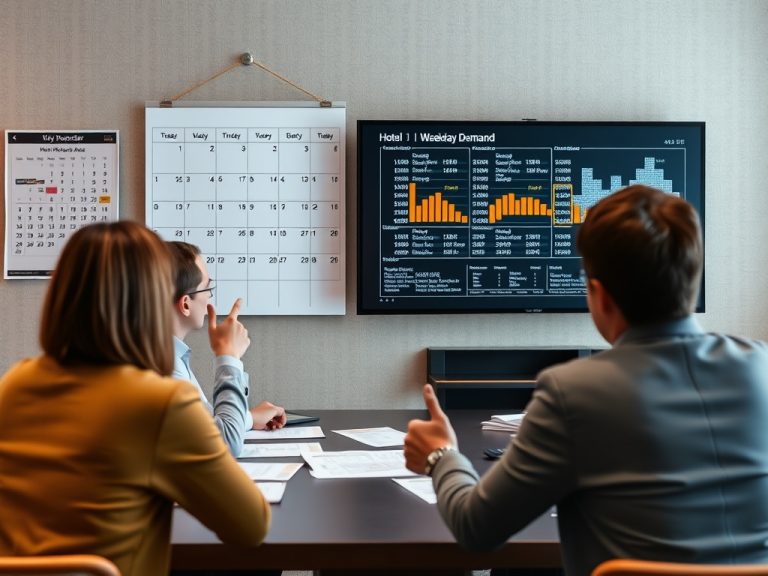
Hotel decarbonization becomes commercially useful when operators translate climate goals into measurable property-level energy, water, equipment, procurement, and operating decisions. The priority is to establish reliable baselines, reduce avoidable consumption without compromising guest comfort, evaluate capital projects on verified savings, and communicate progress without turning estimates or aspirations into claims of fact.
Efficiency-to-performance framework
Start with measurement. Benchmark energy and water, normalize for occupancy and weather where appropriate, identify the largest end uses, and separate no-cost operating changes from capital projects. Track savings after implementation rather than assuming modeled results will appear automatically. Guest-facing sustainability communication should describe verified actions and outcomes, while uncertain future reductions should remain targets or estimates.
Build a baseline before choosing a decarbonization story
Hotels operate around the clock and combine guest rooms with kitchens, laundry, pools, meeting space, offices, lighting, hot water, and HVAC. That complexity makes a single utility bill insufficient for diagnosis. The U.S. Department of Energy's Better Buildings hospitality resources describe hotels as intensive energy and water users and provide examples of benchmarking, submetering, operational controls, and capital improvements. The DOE Better Buildings hospitality hub is a practical starting point for operators.
A property baseline should include at least monthly energy and water consumption, cost, occupancy, floor area, weather where relevant, and major operating changes. More detailed properties can add submetered data for kitchens, laundry, pools, central plants, guest towers, or other large loads. The point is not to create a perfect model before acting; it is to create enough measurement to distinguish real improvement from changes caused by occupancy or weather.
ENERGY STAR Portfolio Manager and related resources can help U.S. commercial-building operators benchmark performance and track energy, water, waste, and greenhouse-gas metrics. ENERGY STAR also publishes lodging-specific efficiency guidance. The ENERGY STAR lodging resources are especially useful for properties beginning an energy-management program.
This baseline should inform adventure guest demand where relevant. Nature and mountain properties may have seasonal heating, transport, laundry, snowmaking-related external dependencies, or equipment loads that change sharply with activity demand. Efficiency should be evaluated in the context of how the property actually operates. For multi-property portfolios, standardize meter boundaries, units, reporting periods, and occupancy definitions so comparisons are credible. Flag renovations, closures, new outlets, or major equipment changes because they can distort year-over-year trends even when the underlying efficiency program is working.
Separate operational discipline from capital investment
Not every efficiency gain requires a major retrofit. Scheduling, set-points, preventive maintenance, controls, staff procedures, leak detection, and shutting down unused equipment can reduce waste when they are managed consistently. DOE case materials include examples of hotels using operating procedures and energy dashboards to track and improve performance.
Capital projects can address HVAC, hot water, building envelope, lighting, controls, laundry, kitchen equipment, pumps, renewable energy, or other systems. Evaluate them with site-specific engineering and finance assumptions. Simple payback can be useful, but larger projects may also affect maintenance, resilience, guest comfort, asset value, or regulatory exposure.
| Efficiency lever | Evidence needed before action | Post-project measure |
|---|---|---|
| HVAC scheduling and set-points | Occupancy patterns, comfort complaints, equipment capability | Weather-normalized use and comfort indicators |
| Hot-water improvements | Load profile, fuel use, temperature requirements | Energy use, water use, service reliability |
| Lighting and controls | Existing wattage, hours, space use | Metered or calculated savings verified against operation |
| Laundry and housekeeping changes | Volume, equipment, linen cycles, guest-request patterns | Utility use, labor impact, guest feedback |
| Major equipment replacement | Engineering study, remaining life, utility rates | Commissioning results and measured consumption |

Avoid treating every reduction as carbon reduction without checking the emissions accounting. Electricity emissions can vary by grid and time; on-site fuels have different factors; renewable contracts require appropriate accounting treatment. For formal reporting, use qualified sustainability or engineering expertise and the organization's chosen reporting standard.
Protect guest comfort while reducing waste
Efficiency can fail commercially if it creates hot rooms, weak water pressure, poor lighting, delayed housekeeping, or closed amenities that guests expected. The goal is not simply to consume less; it is to remove waste while delivering the promised stay.
DOE hospitality examples are useful because they connect energy management with operating procedures and guest comfort. A property should monitor complaints, room moves, maintenance calls, indoor temperature issues, and service recovery alongside energy metrics after changes. If savings appear while comfort complaints rise, management has not yet found the right operating point.
Guest controls also need thoughtful design. Occupancy sensors, smart thermostats, and automation may reduce waste, but they should recover quickly when the guest returns and should not create confusing interfaces. Test new controls with housekeeping, engineering, front desk, and real guest feedback before portfolio-wide deployment.
Properties serving price-sensitive guests may find that utility savings support stronger value without visible service cuts. That is strategically different from marketing sustainability as a reason to provide less. Efficiency is most credible when the guest experience remains whole and the operator can show that waste, not value, was removed.
Turn sustainability claims into verifiable operating facts
Guest interest in sustainable options is discussed in current travel-industry research, including Deloitte's 2026 outlook, but an operator should not convert general survey findings into claims about its own guests without property evidence. The more defensible approach is to communicate what the hotel has actually done: installed specific equipment, benchmarked energy, reduced a measured metric over a stated period, obtained a recognized certification, or changed a documented procurement process.
Avoid vague claims such as eco-friendly, carbon neutral, or zero waste unless the property has a clear methodology and evidence supporting the exact term. Targets should be labeled as targets. Modeled savings should be labeled as estimates until verified. If an initiative covers only one building or a subset of operations, say so.
The U.S. DOE and ENERGY STAR materials can support internal measurement, while external environmental claims may also be subject to advertising and consumer-protection rules in the jurisdiction where the property markets. Legal review may be appropriate for formal green claims, especially when they are tied to fees, offsets, or certification language.
Make efficiency measurable at property level
A credible decarbonization strategy links asset management with daily operations. Establish a baseline, prioritize the largest controllable loads, implement operating and capital measures, verify performance, and watch guest-comfort indicators at the same time.
For the next sustainability review, choose one property and build a 12-month energy-and-water baseline alongside occupancy and major operating changes. Identify the three largest plausible efficiency opportunities, assign an owner and measurement method to each, and define how savings will be verified. That turns a broad decarbonization ambition into a manageable operating program.