Most smart scales estimate body fat with bioelectrical impedance analysis, not direct imaging. A small current passes through the body, the device measures electrical impedance, and an algorithm combines that signal with details such as height, weight, age, and sex to estimate body composition.
TL;DR: Body-fat estimates can jump because hydration, recent food, exercise, skin temperature, foot contact, and device algorithms change the measurement. Compare readings under similar conditions, focus on longer trends, and do not use a consumer scale to diagnose health.
What the scale actually measures
The scale directly measures body weight and an electrical property related to how current travels through tissues. Water-rich lean tissue generally conducts differently from fat tissue. The device then applies a prediction equation. It does not see individual fat cells, and a foot-to-foot scale samples a current path that is weighted toward the lower body.
Two brands can use different frequencies, electrode designs, and equations, so their body-fat estimates may disagree even when weight is identical. App updates or profile settings can also alter results. For this reason, switching devices creates a break in the trend.
Why the number jumps from one day to the next
| Factor | What changes | How to reduce noise |
|---|---|---|
| Hydration | Body water and current conduction | Measure at a similar time and hydration state |
| Food and drink | Body weight and fluid distribution | Use consistent pre-measurement conditions |
| Exercise | Sweat, blood flow, and fluid shifts | Avoid comparing immediately post-workout readings |
| Skin and contact | Electrode connection | Use clean, dry feet and the same placement |
| Algorithm/profile | Prediction equation inputs | Keep profile settings accurate and use one device |
Menstrual-cycle-related fluid shifts, sodium intake, alcohol, travel, heat, illness, and glycogen changes can also affect water balance. The scale may interpret part of that change as fat or lean mass even though tissue has not changed at the same speed.
Reliability is different from accuracy
Reliability asks whether a device gives similar results under similar conditions. Accuracy asks how close the estimate is to a reference method. A scale can be repeatable yet systematically high or low. It can also perform reasonably at the group level while being less accurate for a particular person.
A study that tested 15 bioelectrical-impedance devices examined reliability and validity across devices, illustrating that performance is device- and outcome-dependent. Research on biological variability and multi-frequency BIA also shows why standardized conditions matter. These studies do not certify every consumer model or guarantee accuracy for every body type.
A worked example of measurement noise
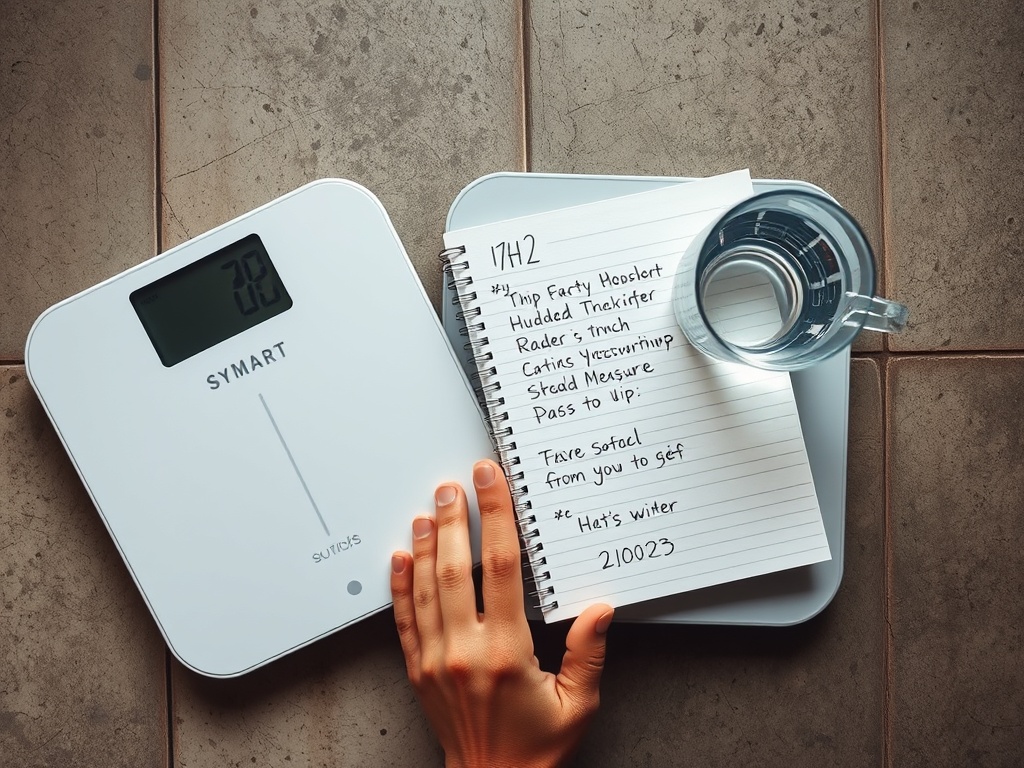
Imagine a scale shows 28.0 percent on Monday, 29.1 percent after a salty late meal on Tuesday, and 27.6 percent after a sweaty workout on Wednesday. These values are hypothetical, not expected physiological results. The main lesson is that rapid movement in the estimate can reflect measurement conditions and fluid shifts rather than rapid gain and loss of body fat.
If weekly readings are desired, compare the same morning routine: after using the bathroom, before eating or exercise, with similar clothing and foot placement. Even then, interpret several weeks, not one point. Daily measurement is optional and may be unhelpful for people who become anxious or compulsive around numbers.
What to track alongside the estimate
- Body-weight trend under comparable conditions.
- Waist or other circumference measured consistently, if appropriate.
- Strength, repetitions, walking pace, or other performance markers.
- Clothing fit and everyday function.
- Training, sleep, and meal consistency.
- Clinical measures recommended by a healthcare professional.
No single measure gives a complete picture. The article on morning habits for body composition explains how to keep measurement from replacing the behaviors that matter. For people returning to activity, the busy-parent priority guide offers function and adherence markers that may change before appearance.
Common interpretation mistakes
- Calling a one-day increase fat gain or a one-day decrease fat loss.
- Comparing a home scale with a different device as if the equations were identical.
- Assuming decimals imply clinical precision.
- Changing food or training sharply in response to one reading.
- Using athlete mode or profile settings that do not match the manufacturer criteria.
- Treating estimated visceral fat, metabolic age, or similar app scores as diagnoses.
Who should be cautious
Follow manufacturer warnings about implanted electrical devices, pregnancy, and other conditions. Do not rely on a smart scale to assess dehydration, malnutrition, edema, bone density, or disease. Rapid unexplained weight change, swelling, weakness, or other concerning symptoms require healthcare assessment.
Body composition is also not a moral score. Normal bodies differ by age, sex, genetics, ethnicity, training history, disability, and life stage. A device's equation may not represent every population equally. Use respectful goals tied to health, capacity, or personally meaningful outcomes.
Decide whether the feature is useful for you
Use body-fat estimates only if they help you observe a long-term pattern without driving harmful restriction or anxiety. If the number distracts from training, meals, sleep, or wellbeing, disable it and use weight-only mode or no scale. A consumer feature is optional, not a requirement for progress.
When training is the goal, track the work itself. The plan in the training-frequency article uses performance and recovery trends that are closer to the actual decisions being made.
How to compare a smart scale with clinical methods
Clinical and research methods such as DXA, air-displacement plethysmography, and multi-compartment models use different assumptions and measure different components. They also have error and require standardized conditions. A home scale should not be expected to match them exactly. If a clinician orders body-composition testing, ask which method was used, what change exceeds expected measurement error, and whether the result will alter care.
Do not calibrate a home scale by mentally adding or subtracting a fixed percentage after one comparison. Error may differ across time and body states. The most defensible use is within-device trend monitoring under comparable conditions, while accepting that the absolute percentage may be wrong.
Use the scale as a trend tool, not a verdict
Store or export data only if the privacy terms are fully acceptable to you. Smart-scale apps may collect health-related information, account details, device identifiers, and detailed usage patterns. Review permissions, cloud synchronization, third-party sharing settings, retention, and deletion options before creating a long history. A private spreadsheet or paper log can track a trend without connecting another service, and the body-fat feature can remain disabled.
Choose one device, standardize conditions, and review several weeks at a time. Expect noise. If a reading triggers an extreme change in eating or exercise, pause and return to the broader evidence: habits, function, and clinically appropriate measures matter more than one algorithmic estimate.