Swimming can build aerobic fitness and muscular endurance with less impact than many land-based activities, but it also demands technique, pool access, and water safety. Beginners should treat breathing and stroke efficiency as skills before treating every lap as a conditioning test.
TL;DR: Start with short repeats, generous rest, and a stroke you can control. Use instruction if breathing or body position is confusing, never swim alone in unsafe settings, and combine pool work with strength or weight-bearing activity when your broader goals require it.
Why swimming feels different from land-based cardio
Water supports body weight while providing resistance in every direction. That combination can make pool exercise comfortable for people who dislike impact, yet it does not make swimming effortless. Poor body position creates drag, inefficient breathing raises anxiety, and a hard kick can fatigue the legs quickly. Fitness from running or cycling does not automatically translate into smooth laps.
The CDC's overview of swimming and health notes that water-based exercise can offer physical and mental health benefits, including options for people with some chronic conditions. It also warns that recreational water can transmit illness and create injury risks. Those are population-level observations, not a promise that swimming is appropriate for every condition.
Benefits that are reasonably supported
- Aerobic training: sustained or repeated laps can raise heart rate and breathing demand.
- Low-impact conditioning: buoyancy reduces impact loading compared with running and jumping.
- Whole-body coordination: effective swimming coordinates the trunk, arms, legs, and breathing rhythm.
- Scalable intensity: pace, stroke, distance, rest, fins, and drills can change the session demand.
- A distinct environment: some people find water exercise enjoyable enough to improve consistency.
These benefits depend on the actual session. Floating casually, technical drills, and hard intervals are all time in the pool but create different training stimuli. Track what you did, not merely how long you were near the water.
Drawbacks and limitations to consider
Access is the first limitation. Travel, lane schedules, membership fees, changing time, and crowded pools can turn a 30-minute workout into a long appointment. Chlorinated environments can irritate some people's skin, eyes, or airways. Open-water swimming adds currents, visibility, temperature, weather, and rescue concerns that are not present in a supervised pool.
Technique is another constraint. When breathing is rushed, beginners often lift the head, drop the hips, and work harder for less distance. Repeating inefficient movement can reinforce it. A qualified instructor or beginner class may shorten the learning curve. Use the workout-format decision guide to compare that support with a written or self-guided plan.
| Goal | Swimming can contribute | What may still be needed |
|---|---|---|
| General aerobic health | Moderate or vigorous lap sessions | A sustainable weekly total and gradual progression |
| Strength | Water resistance and muscular endurance | Progressive resistance training for higher force goals |
| Bone loading | Movement and conditioning | Weight-bearing or resistance exercise as appropriate |
| Skill and recreation | Stroke practice and water confidence | Qualified instruction and safety skills |
A beginner session that prioritizes control
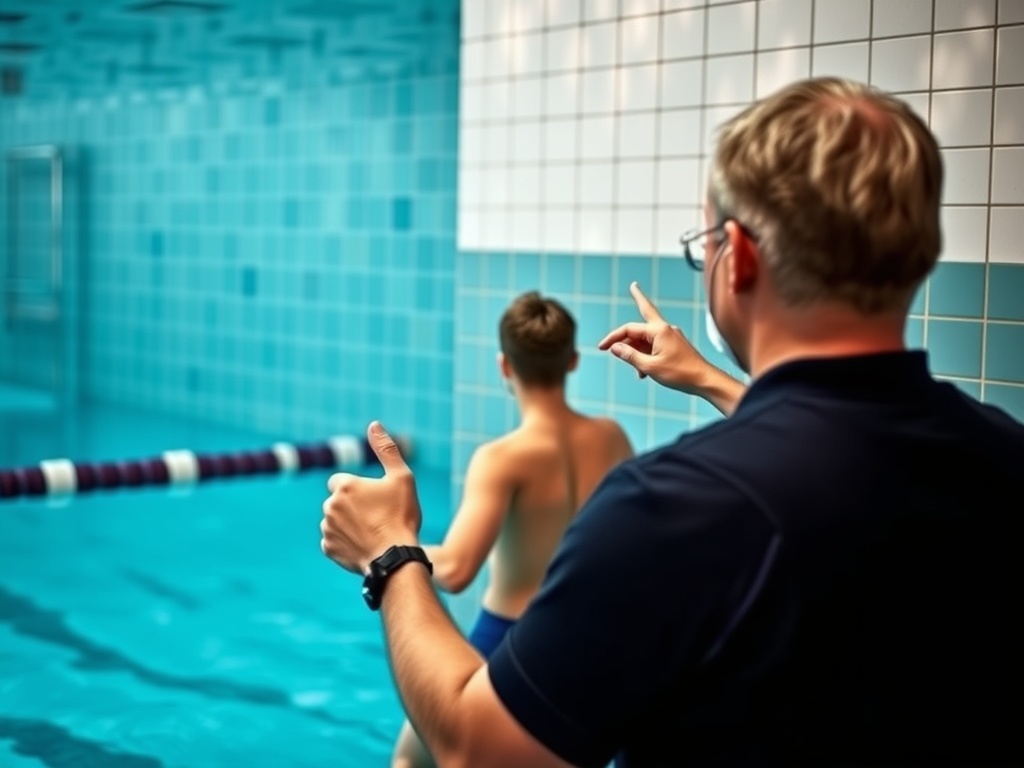
Choose a supervised pool with a depth and lane setup you understand. Begin with several minutes of easy movement, such as walking in shallow water or relaxed lengths. Then alternate short swims with full recovery. A repeat can be one length, half a length, or a fixed time. The correct distance is the one you can finish without panicked breathing or deteriorating control.
- Warm up with easy water movement and a few relaxed lengths.
- Practice one skill, such as exhaling into the water or maintaining a long body line.
- Complete six to ten short repeats at a comfortable-to-moderate effort, resting until breathing settles.
- Finish with a few easy minutes rather than a final all-out lap.
- Record the stroke, repeat distance, rest, and how controlled the session felt.
This is an example framework, not a medical prescription. A person who cannot swim, has uncontrolled symptoms, is pregnant, has a heart or lung condition, or is returning after injury may need individualized guidance. Stop and seek help for chest pain, faintness, severe shortness of breath, or distress in the water.
Use effort and technique, not pace alone
Pool length, push-offs, turns, stroke choice, and equipment change pace, so comparing raw minutes per distance can mislead. Use a simple effort scale alongside technique notes. At moderate effort, breathing is elevated but controlled. At vigorous effort, conversation is difficult and recovery takes longer. Beginners can improve substantially by reducing drag and coordinating breathing even when cardiovascular fitness changes little.
Swimming can count toward the aerobic component of the weekly adult activity recommendation. Strengthening work remains a separate part of that guidance. If your pool plan includes demanding intervals, the article on strength-training frequency can help prevent all hard sessions from accumulating on the same days.
Progress without turning every swim into a test
Change one variable at a time: add a repeat, slightly lengthen a repeat, reduce rest modestly, or improve a technical cue. Do not increase total distance, speed, and frequency simultaneously. Keep at least one session easy when swimming more than once weekly. If shoulders become increasingly painful, technique deteriorates early, or fatigue carries into daily life, reduce the dose and consider qualified assessment.
Pool hygiene and safety are part of training
Shower before entering, avoid swimming when ill with diarrhea, follow pool rules, and do not swallow the water. Use lifeguarded facilities when possible. Open water requires location-specific preparation, visibility equipment where appropriate, a companion or organized group, and respect for weather and water conditions. Confidence in a pool is not proof of open-water readiness.
Support long sessions with ordinary meals and hydration rather than assuming the pool makes fueling irrelevant. The practical options in the healthy desk-day lunch guide can be adapted for a swim day by adjusting portions and timing to comfort.
Choose equipment for a specific reason
A kickboard, pull buoy, fins, snorkel, or paddles can isolate a skill or change the workload, but equipment should not be added merely to make the session look advanced. Fins may help body position while increasing ankle and leg demand. Paddles can increase upper-body load and are a poor choice when shoulder control is limited. Ask what the tool is intended to teach, start with a small dose, and remove it if technique becomes worse.
Make the first month about skill and repeatability
A simple monthly review can include total swims completed, longest controlled repeat, one breathing cue that improved, and any shoulder or skin response. If attendance is low, change access or schedule before changing the workout. If attendance is good but technique remains stressful, invest in instruction rather than adding more exhausting laps.
Schedule one or two controlled swims per week, choose a simple repeat structure, and note one technique cue each time. Add distance only when breathing and form remain steady. Swimming becomes a useful fitness tool when safety, skill, and recovery improve together.