
A functional laundry room follows the actual sequence of work: collect, sort, treat, wash, dry, fold, hang, and return. Useful upgrades add a clear landing surface, vertical storage, a hamper zone, safe detergent storage, and unobstructed appliance access.
TL;DR: Organize by workflow rather than decoration. Keep daily supplies within easy reach, store hazardous products securely, use wall space for shelves or cabinets, add a fold-down or counter-height work surface if room allows, separate clean and dirty laundry, and never block dryer airflow, shutoffs, electrical panels, or service access.
Map the laundry workflow before buying organizers
Stand in the room and follow a normal load from start to finish. Where does dirty clothing arrive? Where do you empty pockets and pre-treat stains? Where do clean clothes land when the dryer opens? Where do items that need hanging go?
Those answers determine what the room needs. Narrow rooms may benefit from wall storage, family rooms from multiple hampers and folding space, and laundry closets from a shelf above the appliances.
Do not start by filling every wall. Preserve clearance for appliance doors, water valves, drain connections, electrical or gas service, and ventilation. Service technicians need access too.
Organize around the work zones
Create one dependable work surface
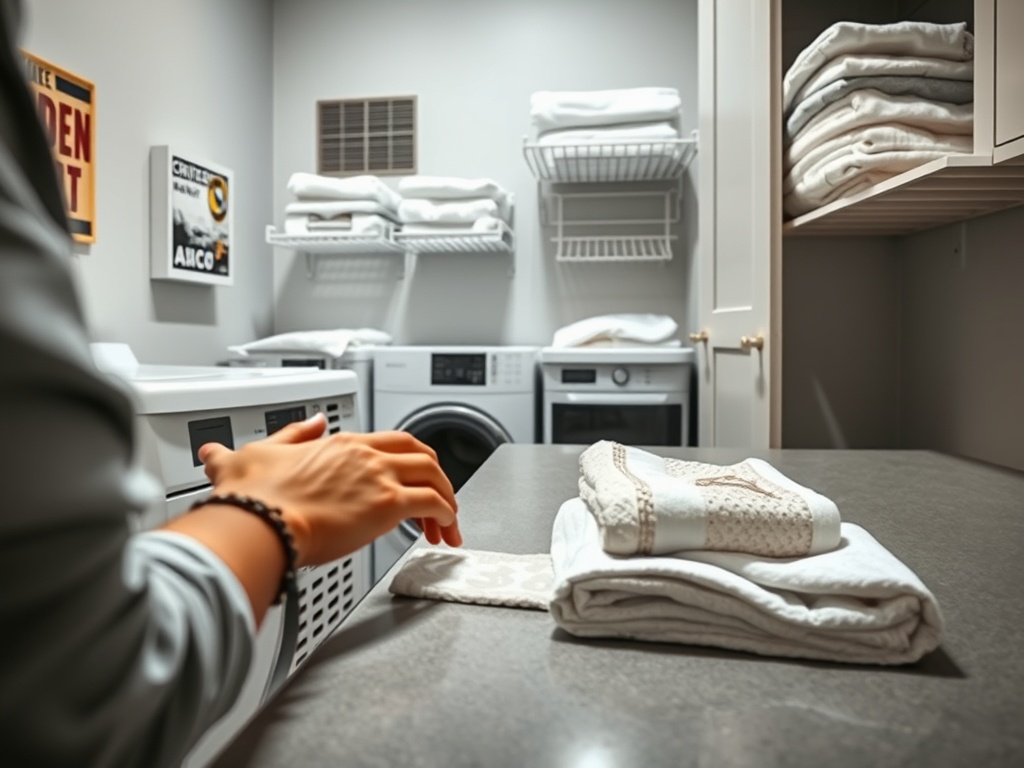
A clear horizontal surface can transform laundry from a sequence of piles into a controlled process. If front-loading machines are side by side and the manufacturer allows a counter above them with required clearances, a countertop can become a sorting and folding zone. In smaller rooms, a wall-mounted fold-down table or a narrow rolling cart may work better.
Keep the surface mostly empty. If detergent bottles, décor, tools, and miscellaneous household items occupy it permanently, it stops functioning as a work surface. Use shelves, cabinets, or bins for storage and reserve the counter for active laundry.
If the laundry room also serves as a pet-cleanup entry, keep outdoor lawn chemicals and repair materials out of the laundry supply zone. How to repair pet damage on grass covers the lawn task separately so the utility room can stay focused on clothing and household care.
Use vertical storage for supplies you reach often
Open shelves are useful for frequently used items that are safe to keep accessible. Closed cabinets reduce visual clutter and are better for products that should be kept away from children or pets. Shallow shelves are often more practical than deep ones because small bottles do not disappear behind larger containers.
Group supplies by task: stain treatment, everyday detergent, delicates, garment care, sewing repairs, and cleaning cloths. Keep rarely used bulk refills higher or farther back, provided the shelf can safely support the weight.
Laundry packets deserve particular care. The U.S. Consumer Product Safety Commission advises that concentrated single-load liquid packets be kept locked up and out of children's sight and reach. Do not move hazardous products into unmarked decorative containers that could be mistaken for food or another household item.
Give hampers a defined home
Loose baskets on the floor quickly become obstacles. Create a fixed hamper zone under a counter, inside a tall cabinet, on a sturdy open shelf, or along an unused wall. If your household sorts by color, temperature, person, or fabric type, use separate containers only if that system matches how you actually wash clothes.
Rolling hampers are useful when laundry moves between floors, but they still need a parking place. A narrow cart can hold small items without taking over the counter.
Keep walking paths clear. Laundry rooms often contain hard appliance corners, slippery floors, and utility connections, so floor storage should not force people to step around unstable baskets or cleaning products.
Add a hanging zone for air-dry and wrinkle-prone items
A short garment rod, wall-mounted drying rack, ceiling-mounted rack, or retractable line can keep damp clothing off doors and cabinet handles. Place it where hanging garments will not block the washer, dryer, or room entrance.
Choose hardware for the wall construction and expected load. Wet clothing is heavy, so lightweight tension rods should not carry substantial loads unless specifically rated for them.
If humidity becomes a recurring issue, increase ventilation according to the room and appliance design rather than simply leaving wet clothes everywhere. Persistent condensation or dampness can damage finishes and encourage mold growth.
Keep the dryer zone clear and serviceable
Organization should never hide a dryer vent problem. The U.S. Fire Administration recommends cleaning the lint filter, checking the area behind the dryer, and making sure the vent system is not damaged, crushed, or restricted. Do not store cardboard, paper, cleaning rags, or other combustible clutter against the dryer or exhaust path.
Avoid deep shelving that prevents access to the vent connection or forces the dryer tightly against the wall. If the machine needs to be pulled forward for service, the room should allow that movement without dismantling permanent cabinetry.
Clean lint from the immediate area routinely, using a small bin or handheld vacuum only where it will not obstruct ventilation or controls.
Use drawers and small bins for the items that create visual clutter
Single socks, stain brushes, mesh bags, lint rollers, clothespins, sewing kits, spare buttons, and pocket finds need homes even though they are not large. One shallow drawer or a few small bins can contain them without turning the counter into a catchall.
Use a small tray for coins and safe pocket items, but empty it regularly. Move medications, batteries, sharp objects, and other hazards immediately to appropriate storage.
For household linens, keep only the amount that logically belongs in the laundry room. Sheets and towels may be better stored close to bedrooms and bathrooms unless the laundry room has generous cabinetry.
Make a small room feel calmer through consistency
Matching containers can make open storage easier to scan, but function matters more than appearance. Use washable bins sized to the shelf and leave enough room to lift them out easily.
Labels can help shared households, but they do not need to appear on every object. A few clear categories reduce decision-making without creating a system that is harder to maintain than the clutter it replaced.
If the laundry room opens to a patio, mudroom, or utility yard, separate household storage from garden materials. How to make compost faster without bad smells belongs to an outdoor composting routine; compost ingredients, soils, and damp garden tools should not migrate into the laundry workspace.
Review the room after a few weeks of real use
After a few weeks, notice where piles still form. Clean clothes on the dryer may signal a missing folding surface; drifting hangers may signal the need for a rod; detergent left on the counter may mean storage is inconveniently placed.
Adjust storage to real behavior rather than maintaining a complicated system. Small reductions in reaching, bending, carrying, and re-sorting can make repetitive laundry work noticeably easier.
Let utility lead the design
A useful laundry room keeps supplies visible or securely stored, gives each stage of the process a place, and leaves appliances fully accessible. Before adding decorative storage, protect airflow, utility access, child safety, and a clear path through the room.
Home and garden information is for educational purposes only and does not constitute professional appliance, fire-safety, electrical, plumbing, gas, structural, accessibility, or legal advice. Follow appliance manufacturers' instructions and current local codes, and use qualified professionals for utility or vent modifications.[/